Ming porcelain from the Portuguese shipwreck Espadarte (1558)
The Annual Dr Mok H. Y. Charitable Foundation Lecture spopnsored by Dr Edwin Mok
For almost 450 years, the remains of the Portuguese nau Espadarte were buried in the shallow waters off Fort San Sebastian on Mozambique Island, which was the former Portuguese capital of East Africa. The Espadarte, previously known as the ‘Fort San Sebastián Wreck’, sank in May 1558 en route to Lisbon.
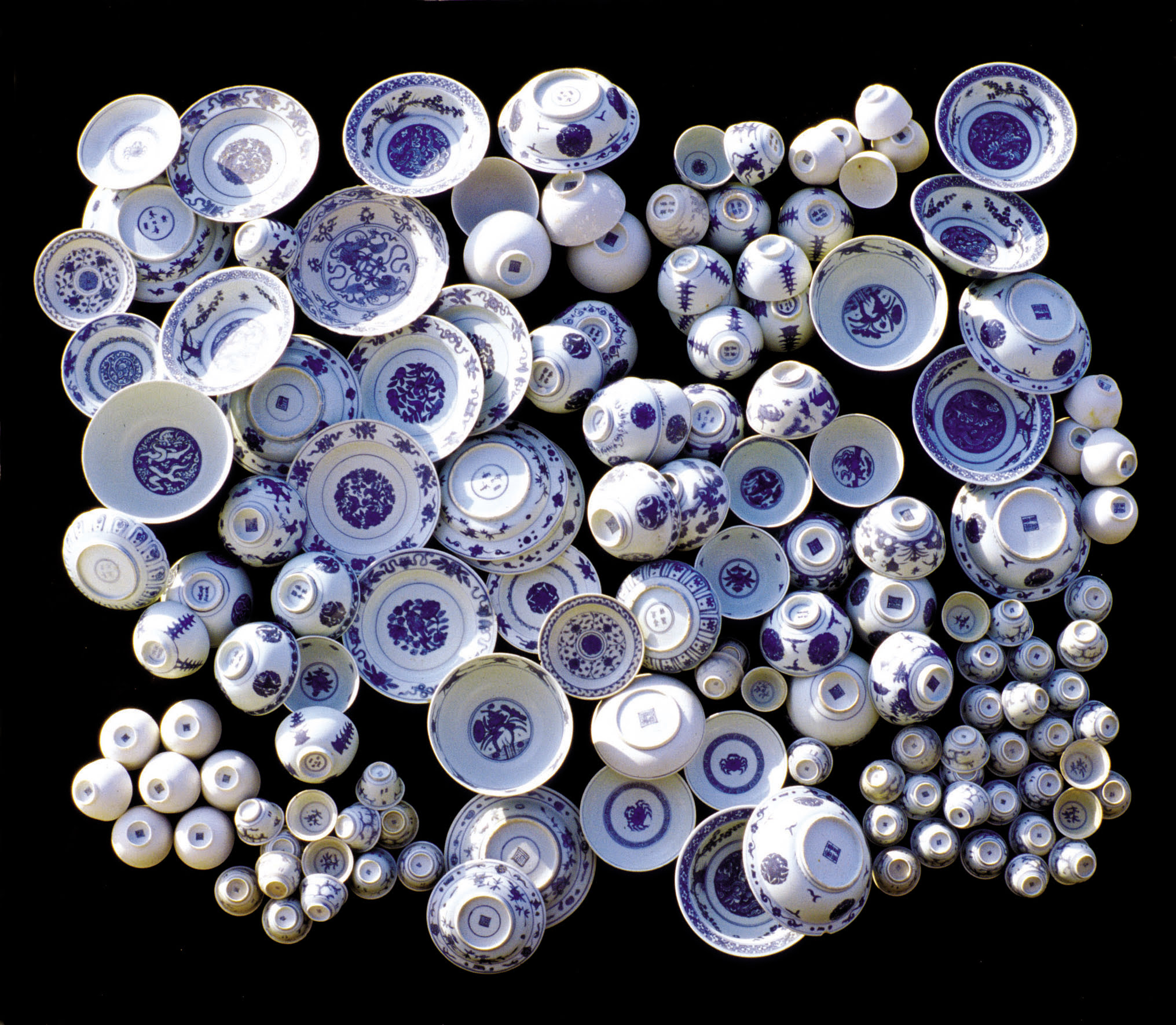
In 2001, underwater archaeologists began recovering the cargo from the wreck site, which included over 1,000 intact pieces of Chinese porcelain along with a large quantity of shards. The porcelain consists mainly of blue-and-white pieces made for export in Jingdezhen, located in Jiangxi province and the most important centre of porcelain production in China.
One key find, made some fifteen months into the archaeological excavation, was a blue-and-white saucer-dish bearing a four-character mark on the reverse which reads guichou nian zao (“made in the guichou year”), which corresponds to 1553. This allowed researchers to securely date the shipwreck to the Jiajing reign (1522-1566). These finds are of great historical importance for both Portugal and the Republic of Mozambique. Moreover, they represent one of the most important collections of dated late Ming porcelain found thus far in Africa and shed light on the mid-sixteenth century maritime trade between Europe, Africa and Asia, when the Iberian kingdom of Portugal ruled over one of the most complex and lucrative maritime trading empires that the world had ever known.
Speakers
 Teresa Canepa
Dr. Teresa Canepa is an independent researcher and lecturer in Chinese and Japanese export art of the 16th and 17th centuries. She completed a PhD in Art History at Leiden University, The Netherlands, and a MA in Fine and Decorative Art at Sotheby’s Institute, London. She is a member of the Council of the Oriental Ceramic Society in London and co-editor of the Society’s Newsletter. The main focus of her current research is the production of Chinese porcelain for the domestic and export markets in the 17th century, during the late Ming and early Qing dynasties. She is the author of Silk, Porcelain and Lacquer: China and Japan and their trade with Western Europe and the New World, 1500-1600 (Paul Holberton Publishing, London, 2016), Jingdezhen to the World: The Lurie Collection of Chinese Export Porcelain from the Late Ming Dynasty (Ad Ilissvm, London, 2019), and co-author with Katharine Butler of the book Leaping the Dragon Gate. The Sir Michael Butler Collection of 17th-Century Chinese Porcelain (Ad Ilissvm, London, 2021). She has lectured and published widely both nationally and internationally on these subjects.
 Beth Gardiner
Beth Gardiner
Independent ResearcherBeth Gardiner is a member of the council of the Oriental Ceramic Society in London and co-editor of the Society’s Newsletter. She has published articles in Orientations and Arts of Asia. She received her master’s degree in art history from Sotheby’s Institute, London and her undergraduate degree in art history from Duke University in the United States. She lives and works in London.